
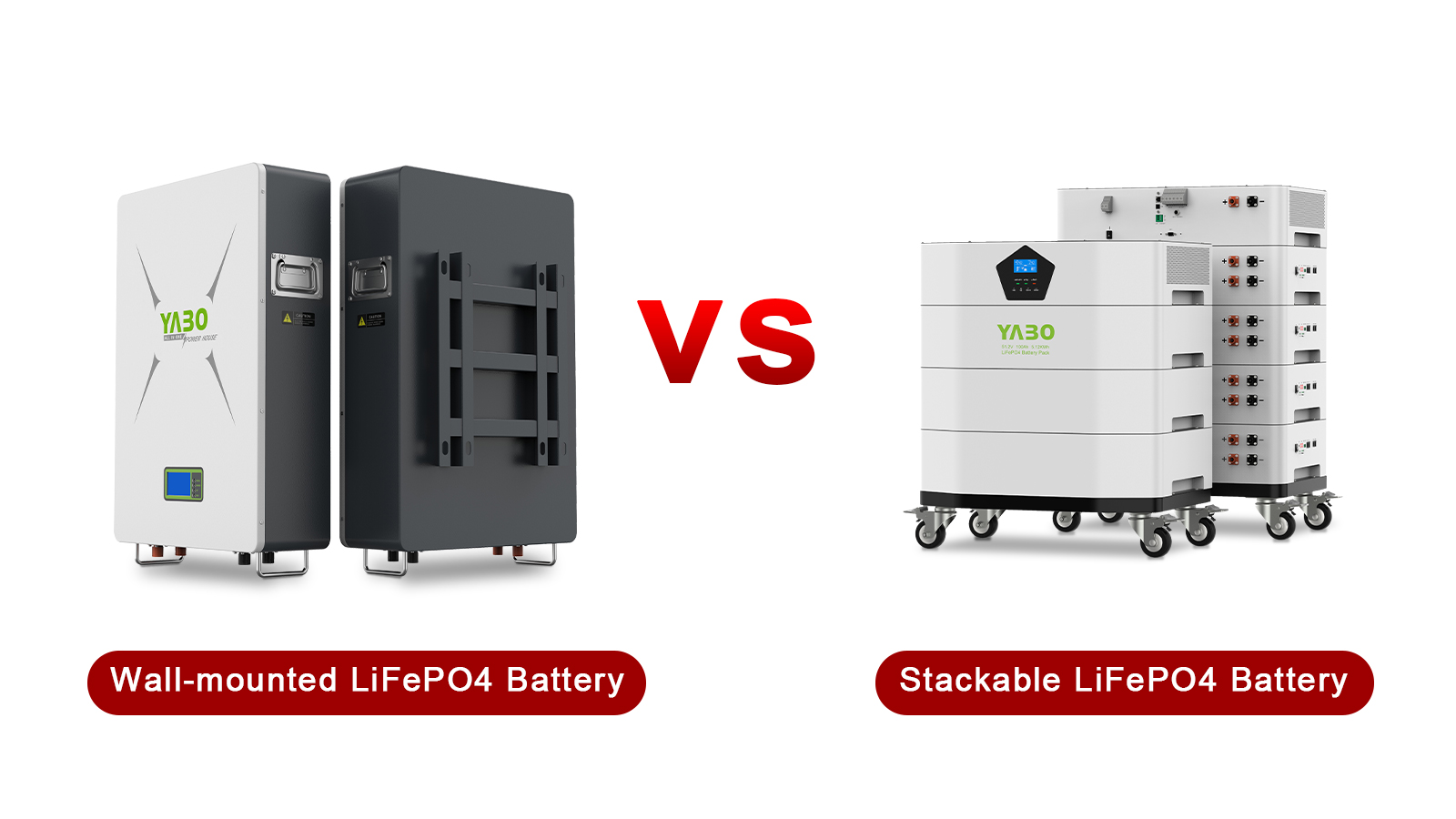
Wall-mounted LiFePO4 Battery VS Stackable LiFePO4 Battery
Wall-mounted LiFePO4 Battery VS Stackable LiFePO4 Battery
As the demand for reliable, sustainable, and efficient energy solutions continues to rise, homeowners and businesses are increasingly turning to lithium iron phosphate batteries (LiFePO4 batteries) for their energy storage needs. Among the most popular choices are 48V LiFePO4 batteries, which are widely used in solar energy systems, backup power, and off-grid applications. However, when selecting a 48V LiFePO4 battery, consumers often face a key decision: should they opt for a wall-mounted LiFePO4 battery or a stackable LiFePO4 battery? Each type offers distinct advantages depending on specific needs, installation preferences, and available space.
1. Design and Space Efficiency
One of the most obvious differences between wall-mounted and stackable 48V LiFePO4 batteries lies in their design and space requirements. Wall-mounted models are designed for vertical installation, typically mounted on a wall in a garage, basement, or utility room. These batteries are ideal for consumers who are looking to save floor space, as they free up valuable room while still offering high storage capacity. Wall-mounted units are particularly beneficial for smaller homes or businesses where space optimization is a priority.
On the other hand, stackable LiFePO4 batteries are designed to be placed on the ground, with multiple units stacked vertically or horizontally to increase capacity. This modular design allows users to expand their energy storage capabilities by adding more batteries as needed. Stackable systems are ideal for larger homes, commercial buildings, or areas with more space, where scalability and flexibility are key factors.
2. Scalability and Expandability
One of the greatest strengths of stackable LiFePO4 batteries is their scalability. Users can start with a single unit and easily add more as their energy demands grow. This makes stackable systems highly flexible, allowing homeowners or businesses to expand their energy storage without having to replace their existing equipment. For instance, if a homeowner installs a 48V stackable battery system with a capacity of 5 kWh and later decides to upgrade to 10 kWh or more, they can simply add another battery (or multiple batteries) to the stack.
While wall-mounted LiFePO4 batteries can also be upgraded to higher capacities, the installation process may not be as straightforward as with stackable systems. Wall-mounted batteries are typically more limited in terms of modularity and scalability, and users might need to replace their existing unit with a larger one if they need more capacity.
3. Installation and Maintenance
Installation of wall-mounted LiFePO4 batteries is typically more involved, requiring the battery to be securely fixed to a wall and connected to the rest of the system. This process may require professional installation, especially for larger units. While the mounting system is usually simple and space-efficient, wall-mounted systems can be less accessible for maintenance or upgrades, as they are fixed in place. However, their fixed installation also ensures a secure and stable setup, which can be beneficial for long-term performance.
In contrast, stackable LiFePO4 batteries offer a more user-friendly installation process. With no need for wall mounting, these batteries can simply be placed on a flat surface, making them easier to install and relocate. Their modular nature allows for easier maintenance, as individual units can be replaced or serviced without disrupting the entire system. This flexibility is especially useful for users who anticipate frequent upgrades or modifications.
4. Aesthetics and Integration
Aesthetically, wall-mounted LiFePO4 batteries often provide a more streamlined and visually appealing solution. They are typically designed to blend into the environment and are often built with a sleek, modern appearance that complements contemporary interiors. For homeowners who prioritize the visual integration of their energy storage system, a wall-mounted unit may be the preferred option.
Stackable batteries, while functional, tend to be bulkier and less visually discrete. Depending on the number of units stacked, they can take up considerable space and might not integrate as seamlessly into a home or business environment. However, for those who prioritize performance over aesthetics, the stackable design offers clear benefits in terms of flexibility and capacity.
5. Cost and Value
When it comes to cost, wall-mounted LiFePO4 batteries generally have a higher upfront cost due to their space-saving design, integrated components, and aesthetic appeal. However, they can provide excellent value in smaller spaces where floor space is at a premium, and the ability to mount the battery on the wall reduces the need for additional installation materials.
Stackable LiFePO4 batteries tend to be more affordable per unit, especially when considering the modular nature of the design. As users expand their system, they can add individual units rather than purchasing an entirely new, larger battery. This can result in cost savings in the long term, particularly for businesses or households that anticipate growing energy storage needs.
Conclusion
Both 48V wall-mounted LiFePO4 batteries and 48V stackable LiFePO4 batteries offer distinct advantages, and the choice ultimately depends on the specific needs of the user. Wall-mounted units are perfect for those who require space efficiency, aesthetic appeal, and a more permanent installation. Stackable batteries, on the other hand, are ideal for those who need flexibility, scalability, and a cost-effective solution that can expand as their energy requirements increase. Understanding these differences allows consumers to make an informed decision when selecting a battery storage solution that best meets their needs. As energy storage technology continues to evolve, both options are likely to play a critical role in helping individuals and businesses achieve greater energy independence and sustainability.
----author: Valarie
Battery Usage Quick Guide-Maximizing Performance and Lifespan
Wall-Mounted LiFePO4 Battery VS Rack-Mounted LiFePO4 Battery
Related Article

